U.S. vs. Indonesia Time Zones: How Time Shifts Affect Global Coordination
Time travel is no longer just a sci‑fi concept. In today’s interconnected world, knowing the exact difference between U.S. time zones and Indonesia’s time zones is essential for scheduling international meetings, coordinating logistics, and even planning travel itineraries. This article breaks down the key differences, highlights daylight saving rules, and explains how the two regions align (or misalign) over the year.
Understanding U.S. Time Zones
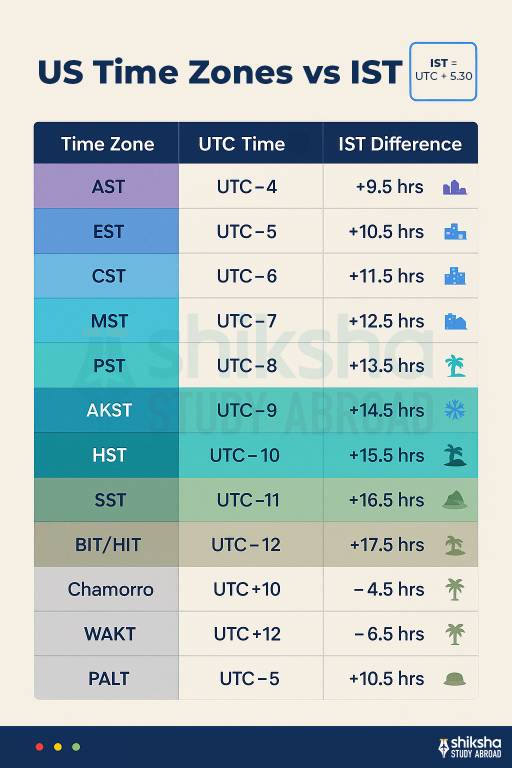
The United States spans six primary time zones: Eastern (EST/EDT), Central (CST/MDT), Mountain (MST/MDT), Pacific (PST/PDT), Alaska (AKST/AKDT), and Hawaii (HAST/HADT). While most of the continental U.S. observes daylight saving time, the state of Arizona (except the Navajo Nation) does not. When daylight saving begins on the second Sunday in March, clocks are set forward one hour; they revert on the first Sunday in November.
Indonesia's Time Zones
Indonesia, located on the equatorial archipelago, uses three time zones: Western Indonesia Time (WIB, UTC+7), Central Indonesia Time (WITA, UTC+8), and Eastern Indonesia Time (WIT, UTC+9). Unlike most countries, Indonesia does not observe daylight saving time. The three zones correspond roughly to the western, central, and eastern parts of the archipelago, covering major cities such as Jakarta, Surabaya, and Jayapura.

Comparing U.S. and Indonesia: Practical Implications
Because the U.S. and Indonesia lie on opposite sides of the globe, the time difference can range from 14 to 18 hours, depending on the U.S. region and the time of year. For example, when it is 8 a.m. in New York (Eastern Time), it is already 10 p.m. on the same day in Jakarta. However, during U.S. daylight saving periods, the gap narrows by one hour, making scheduling easier for some cross‑border interactions.
Business executives, broadcasters, and logistics providers often rely on these differences. A meeting scheduled at 3 p.m. Eastern Time on a non‑DST day will fall on 7 p.m. Jakarta time, whereas the same time during DST will shift to 8 p.m. This nuance can impact everything from stock market openings to live event broadcasts.
Daylight Saving Time Effects
The U.S. daylight saving schedule introduces a temporary shift that can temporarily align some U.S. time zones more closely with Indonesian time zones. For instance, when daylight saving is in effect, Pacific Time (PDT) is only 17 hours behind Jakarta, compared to 18 hours when standard time applies. While Indonesia does not adjust its clocks, the U.S. DST period creates a brief window where coordination becomes slightly more convenient for western U.S. businesses.
Despite these variations, most global coordination tools automatically account for time zone differences and daylight saving changes, reducing the potential for scheduling errors. Nevertheless, a clear understanding of these time dynamics remains vital for professionals who operate across both regions.
Indonesia Time Zone - WhichTimezone

Indonesia Time Zone - WhichTimezone
Jakarta - Local Time & Time Zones In Indonesia | Timezones.com

Jakarta - Local Time & Time Zones in Indonesia | Timezones.com
India Time Vs Indonesia Time: Jakarta Time Zone To Ist – UMMLR

India Time Vs Indonesia Time: Jakarta Time Zone To Ist – UMMLR
