Jakarta Faces Rising Air Quality Crisis: What the Latest AQI Data Reveals
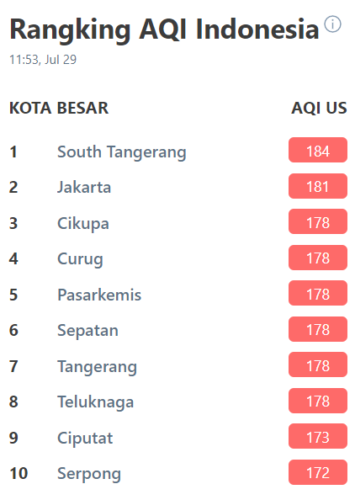
Jakarta has once again slipped into a perilous air quality zone, with the latest Air Quality Index (AQI) readings placing the city in the “unhealthy” category for most pollutants. According to real‑time data, nitrogen dioxide and particulate matter concentrations have spiked, raising alarm among health officials and residents alike.
Current Air Quality Status
Recent AQI measurements indicate that Jakarta’s average daily concentration of fine particulate matter (PM2.5) now exceeds 150 µg/m³, well above the World Health Organization’s threshold for safe air. The city’s AQI consistently ranks in the 200–300 range, signifying levels that can adversely affect individuals with cardiovascular or respiratory conditions.
Contributing Factors
Several elements contribute to Jakarta’s deteriorating air quality. Rapid urbanization has increased vehicle traffic, while the dense concentration of industrial zones along the coast releases significant amounts of sulfur dioxide and volatile organic compounds. Additionally, the city’s geographic position—surrounded by the Java Sea and bounded by mountains—creates stagnant air patterns that trap pollutants.
Health Implications
Prolonged exposure to high PM2.5 and nitrogen dioxide levels can exacerbate asthma, bronchitis, and other chronic respiratory ailments. According to recent health studies, Jakarta residents have reported a 12% increase in hospital admissions for respiratory conditions during periods of elevated AQI. Elderly populations and children are particularly vulnerable.
Public health advisories now recommend limiting outdoor activity during peak pollution periods, especially for individuals with pre‑existing health conditions.
Mitigation Efforts and Future Outlook
The municipal government has initiated several measures to curb pollution, including expanding the public transportation network and enforcing stricter emissions standards for industrial facilities. In addition, a pilot program to promote electric bicycles and scooters has gained traction, aiming to reduce vehicle emissions by up to 15% over the next two years.
Environmental experts stress that sustained progress will require coordinated policy enforcement, community engagement, and continuous monitoring of AQI trends. While the city’s current air quality remains a serious concern, the combination of regulatory action and public awareness campaigns offers a pathway toward cleaner, healthier air in Jakarta.
Pagi Ini Minggu 13 Agustus 2023, Kualitas Udara Di Jakarta Terburuk
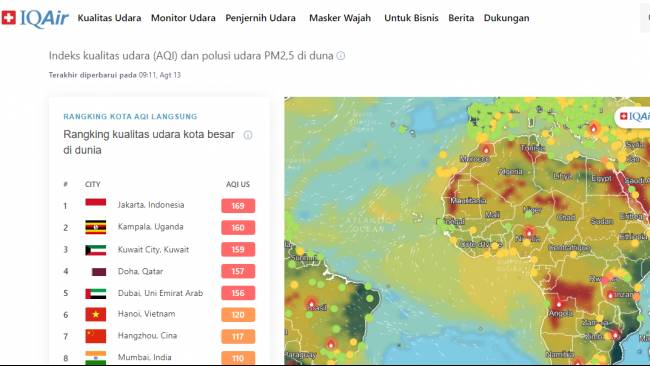
Pagi Ini Minggu 13 Agustus 2023, Kualitas Udara di Jakarta Terburuk ...
Polusi Udara Jabodetabek Hari Ini Kembali Terburuk, Jakarta Jadi Kota

Polusi Udara Jabodetabek Hari Ini Kembali Terburuk, Jakarta Jadi Kota ...
AQI Standards Of Different Countries (US, China, India) – Smart Air

AQI Standards of Different Countries (US, China, India) – Smart Air
Hari Ini, Jakarta Tercatat Sebagai Kota Paling Berpolusi Nomor 2 Di

Hari Ini, Jakarta Tercatat Sebagai Kota Paling Berpolusi Nomor 2 di ...
Rata2 Kualitas Udara (AQI US) DKI Jakarta(2020-Jun 2022) | Flourish

Rata2 Kualitas Udara (AQI US) DKI Jakarta(2020-Jun 2022) | Flourish
Usai 12 Hari Pemberlakuan WFH Ternyata Kualitas Udara Jakarta Tidak Sehat

Usai 12 Hari Pemberlakuan WFH Ternyata Kualitas Udara Jakarta Tidak Sehat
Check Air Quality In Jakarta Using JAKI! || Jakarta Smart City

Check Air Quality in Jakarta Using JAKI! || Jakarta Smart City
Check Air Quality In Jakarta Using JAKI! || Jakarta Smart City

Check Air Quality in Jakarta Using JAKI! || Jakarta Smart City
Kota Jakarta Tinggi Polusi, Adakah Solusinya?

Kota Jakarta Tinggi Polusi, Adakah Solusinya?
